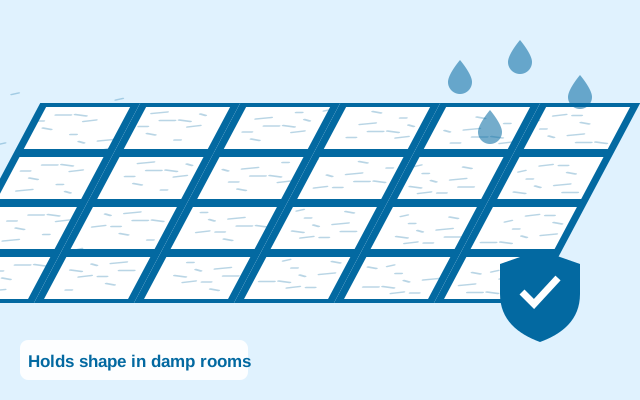
Acoustic ceiling tiles absorb sound inside a room so it’s less echoey and loud. How well they do it is measured by NRC: the higher, the better.
How to read acoustic ratings
| Rating | What it measures | What to look for |
|---|---|---|
| NRC (Noise Reduction Coefficient) | Share of sound absorbed (0 to 1) | 0.55+ for homes; 0.70+ for very echoey spaces |
| CAC (Ceiling Attenuation Class) | How much sound passes between rooms through the ceiling plenum | 35+ where privacy matters |
| AC (Articulation Class) | Speech privacy in open offices | 170+ for open plans |
Fiberglass tiles usually have the highest NRC; dense mineral-fiber tiles usually have better CAC. Few tiles excel at both.
Getting the most from them
- Absorbing sound inside a room is easy; stopping noise from the room above needs mass and decoupling: tiles alone won’t do it. Adding insulation above the grid helps.
- Seal gaps and around light fixtures.
Where to buy
Check current prices: Amazon Home Depot Lowe's
Frequently asked questions
What is a good NRC for ceiling tiles?
For most homes 0.55-0.70 is plenty; recording spaces and theaters benefit from 0.80+.
Do acoustic ceiling tiles soundproof a basement?
They reduce echo in the basement but do little to block footsteps from above. For that you need insulation and resilient mounting, not just tiles.
Tips from readers’ projects
Used Acoustic ceiling tiles? Share a tip from your project: cutting, fitting, cost, how it looks a year later. The first good one goes right here.
Share a project tip
Questions from readers
Question about Acoustic ceiling tiles? Ask it here. We answer the useful ones on this page, in general terms.
Ask a question
Free · No obligation
Get quotes from local ceiling installers
Tell us about your space and we’ll try to connect you with a local drop-ceiling or acoustic-ceiling installer.